
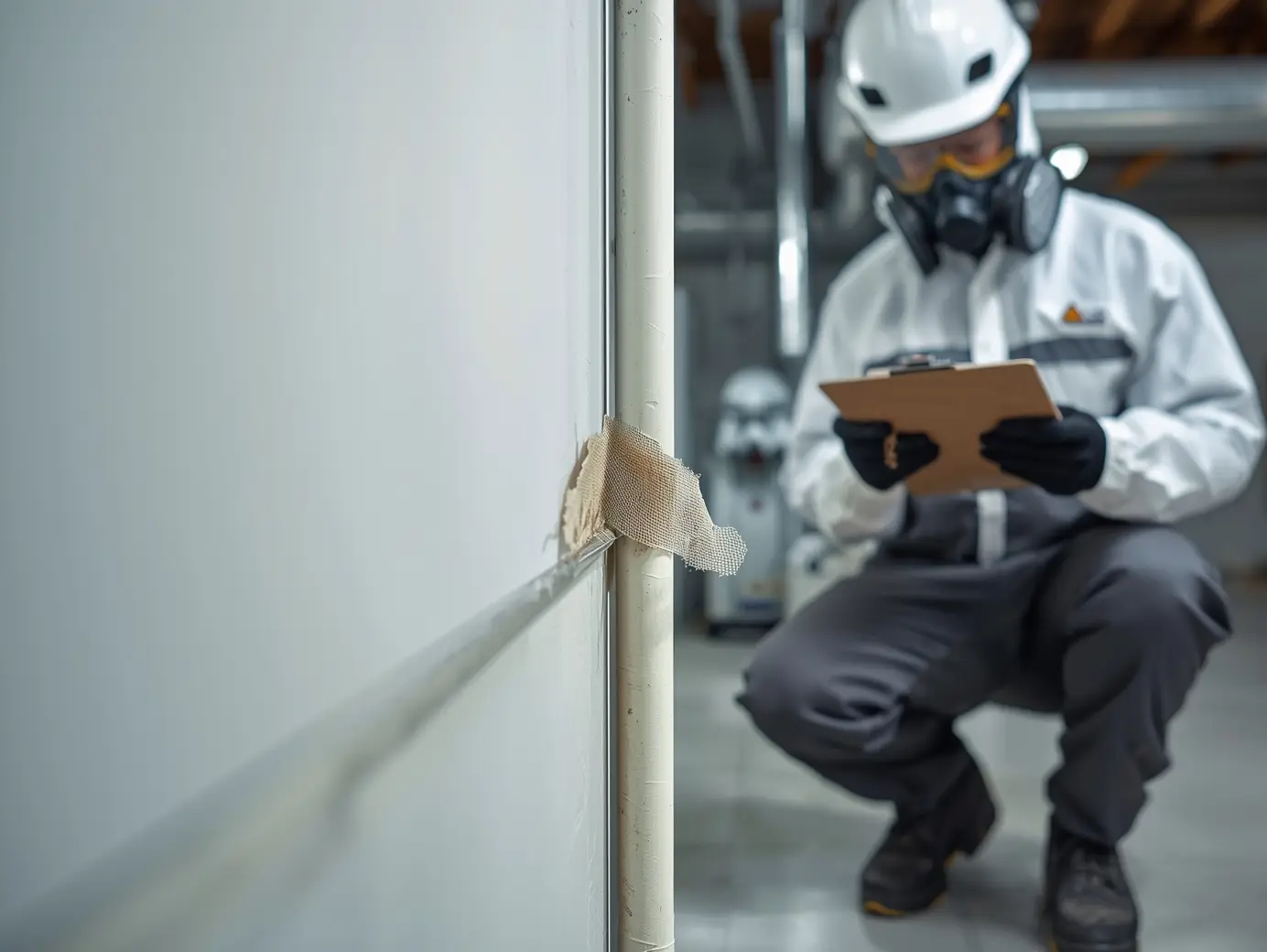

Here’s the thing: some of the most serious building hazards don’t look dramatic. They look like… tape.
Asbestlint (often called asbestos tape) was used for decades to seal, wrap, and heat-proof pipes, ducts, boilers, and joints—especially in older homes, commercial buildings, and industrial sites. In plain English: it’s a fibrous, heat-resistant tape that may contain asbestos. And it matters because when asbestos-containing materials break down or get disturbed, they can release tiny fibers that are dangerous to breathe in.
If you want a quick reference point while you read, here’s our in-context resource link: Asbestlint.
- What it is: A heat-resistant sealing/wrapping tape that may contain asbestos, common in older buildings.
- Main risk: Breathing in airborne asbestos fibers released when the tape is damaged, aging, or disturbed.
- Who should care: Homeowners renovating, facility managers, HVAC/plumbing teams, and small businesses in older premises.
- What to do (safe approach): Assume “possible asbestos,” avoid disturbing it, and arrange inspection/testing with qualified help.
- Biggest mistake to avoid: Sanding/scraping/cutting it “just a little” to see what’s underneath.
What Is Asbestlint?
Asbestlint is commonly used as a catch-all term for asbestos-containing tape—a flexible, fibrous wrap designed to handle heat and help seal seams. Depending on where you live (and who you talk to), you may also hear it described as duct tape for old HVAC joints, pipe wrap tape, boiler sealing tape, or insulation tape.
Where it’s commonly found
If a building has older mechanical systems, Asbestlint can show up in places you don’t notice until repairs start:
- Around ductwork seams (often on older metal ducts)
- On pipe joints and elbows (especially near heat sources)
- Boilers, furnaces, and older heating equipment
- Industrial settings: power plants, ship-related installations, older manufacturing lines
- Behind access panels where past maintenance used heat-resistant wraps
Quick visual cues people report: a white/grayish tape, sometimes layered, sometimes brittle, sometimes “fuzzy” at the edges—especially where it has aged or gotten wet.
Why do people confuse it with other materials
A big reason Asbestlint slips under the radar is that it can resemble everyday stuff:
- Modern foil HVAC tape
- Cloth friction tape
- Old gauze-like wraps used for insulation finishing
- Painted-over sealing tape that looks “normal” until it frays
Also, not every old tape is asbestos tape. The problem is you can’t reliably confirm by eyeballing it—and “close enough” is not a safe strategy with asbestos.
Why Asbestlint Can Be Risky
Asbestos risk is mostly about fiber release and inhalation. If asbestos fibers get into the air and are breathed in, they can lodge in the lungs for a long time and contribute to serious disease over time.
Health risks explained simply
Let’s break it down without the drama:
- Asbestos fibers are tiny—too small to see easily.
- When disturbed, fibers can become airborne.
- If inhaled, they may stay in the body for years, irritating and damaging tissue.
- Long-term exposure is associated with diseases, including asbestosis and certain cancers (including mesothelioma).
This isn’t about a single scary moment—it’s about preventing avoidable exposure, especially during renovations or maintenance.
When it’s more dangerous
Asbestlint becomes a bigger problem when:
- It’s frayed, cracked, brittle, or “powdery.”
- Someone is about to cut/sand/drill/scrape nearby
- Air movement (fans/HVAC) could spread fibers after disturbance
- Repeated maintenance has nicked or peeled it over the years
- Moisture damage has weakened the binder, making fibers easier to release
In short: intact and undisturbed is usually lower risk than damaged and actively messed with—but “lower” doesn’t mean “ignore it forever.”
Regulations and Compliance
Rules vary a lot by country, region, building type, and the kind of work you’re doing (maintenance vs. renovation vs. demolition). Your safest move is to treat asbestos as a regulated material and check your local environmental/health-and-safety authority before any work that could disturb it.
A few widely seen themes across many jurisdictions:
- Duty to manage asbestos in non-domestic buildings (survey, plan, communicate risk).
- Inspection requirements before renovation/demolition in many places.
- Bans on new asbestos products in many regions (while legacy materials remain in older buildings).
- Licensed removal requirements for certain types/amounts of asbestos work.
Compliance snapshot
| Region | Who enforces (typical) | What’s typically required (high-level) | Safe next step |
| UK | Health & Safety regulator | “Duty to manage” in non-domestic premises; survey/management plan; control exposure. (HSE) | If you’re responsible for a building, start with an asbestos survey + register. |
| EU (general) | National regulators + worker safety bodies | Strong controls on worker exposure; bans on new asbestos in many countries; regulated removal and disposal. (Government of the Netherlands) | Check your country’s asbestos authority; plan certified work for disturbance. |
| Netherlands (example) | National government + local implementation | Prohibitions on asbestos use/sale since 1993; EU-wide ban on new products later. (Government of the Netherlands) | Treat legacy asbestos as controlled waste; use qualified services for removal/disposal. |
| USA | EPA + state/local agencies | Inspection + notification thresholds for regulated renovation/demolition; specific handling/disposal rules. (US EPA) | Before major work, check state rules and whether NESHAP applies. |
| Australia (general) | WorkSafe/safety regulators | Licensing frameworks; codes of practice; licensed removal required above certain thresholds. (Safe Work Australia) | Confirm licensing requirements and use trained professionals where required. |
Non-legal note: This is general information, not legal advice. Always confirm current requirements with your local authority or a licensed asbestos professional.
Safe Management Practices
If you remember one idea, make it this: manage asbestos by controlling disturbance and documenting decisions.
Practical do’s and don’ts
Do:
- Treat suspicious tape in older buildings as possible asbestos until confirmed.
- Keep it intact: avoid touching, peeling, or “testing” it yourself.
- Limit access to the area if the tape is damaged or in a high-traffic space.
- Arrange professional inspection/testing if work is planned nearby.
- For facilities: keep an asbestos register and tell contractors before they start.
Don’t:
- Don’t sand, scrape, drill, cut, or power-wash around it.
- Don’t use a regular vacuum (it can spread fibers).
- Don’t bag it like normal trash—disposal is often regulated.
- Don’t assume paint makes it “safe forever” (coatings can fail).
The easy checklist
- Stop: Pause the job if you spot suspicious tape.
- Isolate: Keep people out; shut off fans/HVAC in that zone if feasible.
- Document: Take photos, note the location, and what work was planned.
- Decide: Will you leave it alone, encapsulate, or remove?
- Call: If it’s damaged or work must happen, contact certified help.
- Confirm: Get a plan (and clearance steps if removal is done).
Removal vs Encapsulation vs Monitoring
Not every situation calls for immediate removal. Often, the best option depends on condition, location, and future plans.
Big rule of thumb: If it’s likely to be disturbed (renovation, HVAC upgrades, repeated access), the “do nothing” option gets weaker fast.
Comparison table
| Option | Best for | Pros | Cons | Typical mistakes |
| Removal (abatement) | Damaged tape, high-traffic areas, renovation zones | Eliminates the source when done correctly | Costly, disruptive; improper removal can increase exposure | DIY scraping; hiring unqualified crews; no clearance plan (WorkSafe Queensland) |
| Encapsulation | Intact/stable tape unlikely to be disturbed | Often faster and less expensive than removal | Requires ongoing checks; damage later can reintroduce risk | Thinking it’s “one-and-done”; using the wrong coating/wrap (Innov8 Group) |
| Monitoring / management-in-place | Stable material in low-risk areas with controls | Least disruptive; focuses on prevention | Relies on documentation and discipline over time | No register; contractors not informed; “forgetting” during future work (HSE) |
When to call a certified professional
Call a certified asbestos professional when:
- The tape is fraying, damaged, or shedding
- You’re planning work that will disturb it (HVAC replacement, pipe repair, demolition)
- It’s in a public/commercial setting with compliance obligations
- You need clearance documentation after work (common in regulated contexts)
Cost, Time, and Planning
People always ask, “Okay, what does this actually cost?” Fair question—but asbestos work is very “it depends.”
Realistic expectations
Costs can vary based on:
- How much material there is (a few joints vs. a full mechanical room)
- Access difficulty (tight ceiling voids vs. open basement runs)
- Condition (intact vs. deteriorated)
- Whether testing, air monitoring, or clearance certification is needed
- Local labor rates and disposal requirements
Time planning: Small, contained jobs can sometimes be handled quickly, while larger or more complex sites may take longer due to containment setup, safe removal methods, and disposal logistics.
What typically affects cost the most
- Scope (how many meters/feet of tape, how many locations)
- Friability/condition (crumbly materials generally require stricter controls)
- Working height & access (ladders, confined spaces, rooftops)
- Occupied vs. unoccupied building (after-hours work, temporary closures)
- Documentation needs (surveys, plans, clearance)
If you’re a homeowner: budget for the possibility that the safest choice may be “pause the reno, get it assessed, then proceed.”
FAQs
1) Is Asbestlint dangerous if it’s not disturbed?
Often, the risk is lower when Asbestlint is intact and left alone. The main concern is fiber release—typically triggered by damage, aging, or disturbance during repairs. That said, “low risk” isn’t “no risk,” especially if it’s deteriorating or in an airflow-heavy area like ducts. When in doubt, get it assessed.
2) How do I know if I have Asbestlint?
Age and location are your biggest clues. If your building predates modern asbestos restrictions and you see older tape on duct seams, pipes, boilers, or furnace areas, treat it as suspect. Visual ID isn’t reliable; the safer route is professional inspection/testing—especially before renovations or HVAC work.
3) Can I remove Asbestlint myself?
In many places, DIY removal is restricted or strongly discouraged because improper handling can release fibers and contaminate spaces. Even where it’s technically allowed in limited cases, the risk of doing it wrong is real. If it’s damaged, extensive, or in a workplace/public setting, use licensed professionals and follow local rules.
4) What does Asbestlint look like?
It’s often a white/gray tape wrapped around joints or seams, sometimes layered, sometimes painted. Over time it can turn brittle, fray at edges, or look dusty/fuzzy. The catch: modern non-asbestos tapes can look similar. So treat appearance as a “suspect” signal, not proof.
5) Is testing always necessary?
Not always—but it’s wise when work will disturb the material or when you need to meet compliance obligations. Some facilities use surveys and registers to manage known materials. For homeowners, testing can prevent risky “surprise exposure” mid-renovation and help you choose between monitoring, encapsulation, or removal.
6) What should I do if I accidentally disturbed it?
Stop work immediately. Keep people out of the area, avoid sweeping/vacuuming, and if possible reduce air movement (fans/HVAC). Document what happened and contact qualified asbestos help for next steps. The goal is to prevent further fiber spread and get proper cleanup guidance based on local best practice.
7) Is encapsulation “safe enough”?
Encapsulation can be a sensible option when the material is intact, low-risk, and unlikely to be disturbed. It works by sealing fibers in place, but it’s not magic—damage later can recreate the hazard, so monitoring matters. It’s best used as part of a plan, not a quick cover-up.
8) Does every building have asbestos tape?
No. Asbestos use varied by era, region, and building type. Many newer buildings won’t have it, and even older ones might not. The highest likelihood is in older mechanical areas—ducts, pipes, boilers—where heat resistance was important. If you’re unsure, act cautiously before repairs.
9) What’s the biggest red flag for facility managers?
Uncontrolled maintenance. If contractors open ceilings or service HVAC without knowing what’s present, you get preventable exposure risk and compliance headaches. A basic asbestos management approach—survey/register, labeling where appropriate, and contractor communication—reduces surprise incidents dramatically.
10) Does asbestos exposure always cause illness?
No—and that’s part of what makes it tricky. Health outcomes depend on exposure level, duration, fiber type, and individual factors. But major health authorities link asbestos inhalation to serious disease, so the practical goal is to minimize avoidable exposure—especially during renovation and demolition work.
Key Takeaways
- Asbestlint is often an asbestos-containing tape used for sealing and heat resistance in older buildings.
- The main risk is inhaling fibers released when it’s damaged or disturbed.
- If you’re renovating, assume “possible asbestos” until you have evidence otherwise.
- Don’t scrape or sand—that’s how small problems become big ones.
- Regulations commonly focus on inspection, controlled work practices, and safe disposal.
- Encapsulation can work, but it requires ongoing monitoring.
- For businesses and facilities, an asbestos register + contractor communication is a major risk reducer.
Terms to Know
- ACM (Asbestos-Containing Material): Any material that contains asbestos fibers.
- Friable: Crumbly material that releases fibers easily when disturbed.
- Encapsulation: Sealing ACM with a coating or wrap to prevent fiber release.
- Abatement: Controlled removal or remediation of asbestos hazards.
- Air monitoring: Measuring airborne fibers during/after work (often required in regulated contexts).
- Clearance inspection: A post-work check to confirm an area is safe to reoccupy.
- Asbestos register: A record of known/suspected asbestos locations in a building.
- NESHAP (US): EPA rules that can apply to renovation/demolition with regulated asbestos materials.
Two Quotable Lines
- “With Asbestlint, the danger isn’t the label—it’s the dust you can’t see when it’s disturbed.”
- “If you can avoid disturbing it and document a plan, you’ve already reduced most real-world asbestos risk.”
A calm, smart next step
ScopMagazine publishes home-and-building guides because the most useful safety advice is the kind you can actually follow on a Tuesday afternoon—mid-project, slightly annoyed, and trying not to make things worse.
Near the end of any Asbestlint situation, your goal is simple: keep fibers out of the air, keep people informed, and choose the least disruptive option that still manages risk.
Conclusion
Asbestlint is one of those legacy materials that can sit quietly for years—until a repair, remodel, or maintenance job wakes it up. The safest approach is rarely “panic” and almost never “ignore it.” Treat suspicious tape as potentially asbestos-containing, avoid disturbance, understand that regulations vary, and bring in certified help when removal or high-risk work is on the table. Done right, managing Asbestlint is less about fear and more about smart control.