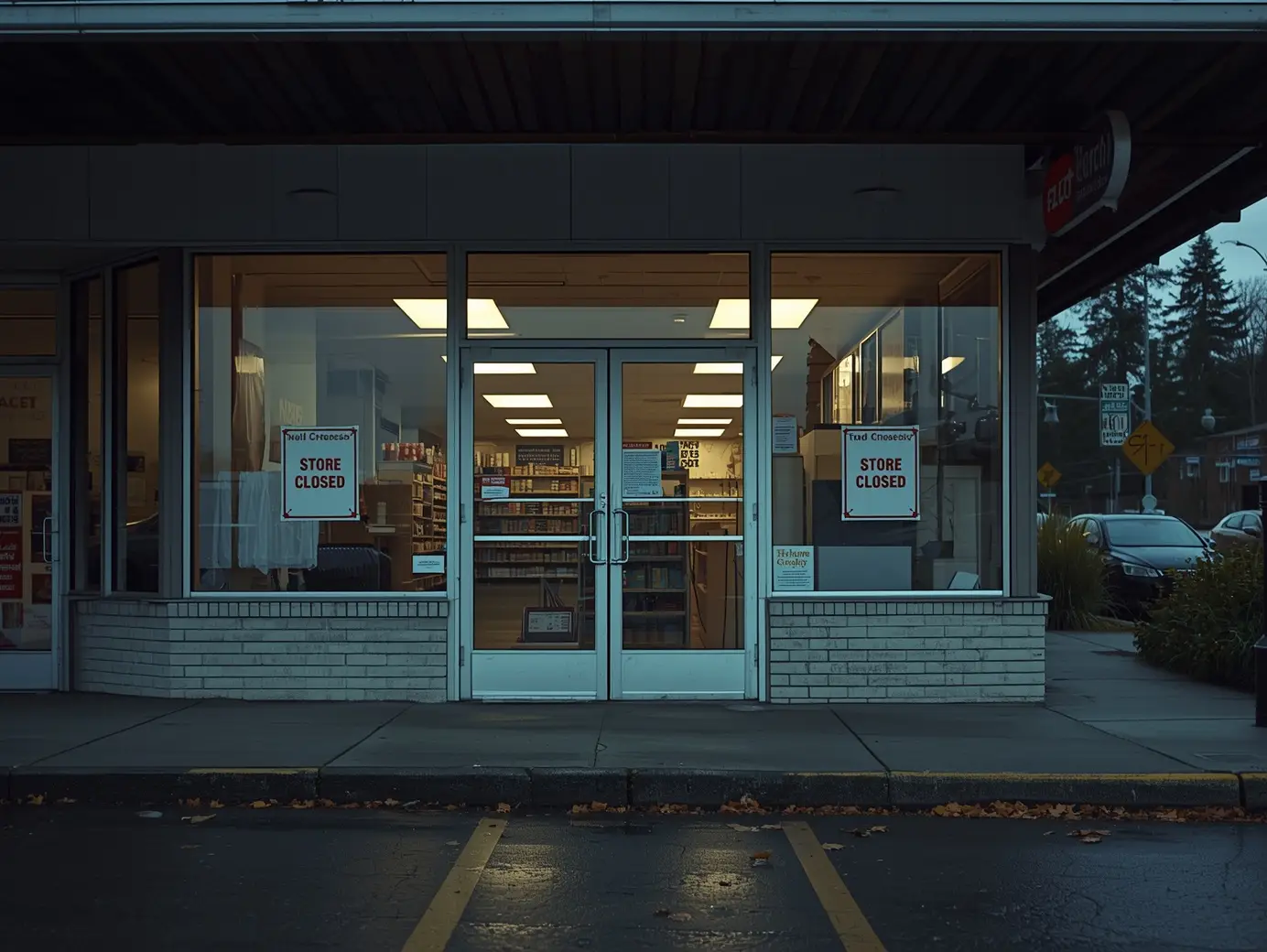

If you grew up running errands in Mill Creek, you probably have a “quick stop” store that feels like part of your routine—until it isn’t.
That’s why this closure hits differently. It’s not only about prescriptions or toothpaste. It’s about losing a familiar place where staff remembered names, and neighbors bumped into each other without planning it.
And if you’re wondering, “Okay… what happened, and what does it mean for the rest of us?”—let’s walk through it, plainly and respectfully.
- A Mill Creek location long associated with a 135-year legacy has reportedly closed.
- The source describes classic pressures: online shopping, chain competition, rising costs, and fewer in-store visits.
- Region-wide, the brand’s final stores operating under the name closed in late September 2025, per local history reporting.
- Communities don’t just lose a store—they lose access, relationships, and small daily conveniences.
- Shoppers can reduce disruption by transferring prescriptions early and comparing nearby options.
What happened in Mill Creek?
The short version of the closure story
A Pocket Journal report describes the Mill Creek store’s closure as the end of a 135-year chapter tied to a beloved local pharmacy tradition.
Separately, regional history reporting notes that the last stores operating under the brand name closed in late September 2025 (Mill Creek included among the final locations in broader coverage).
Quote-ready line: When a neighborhood pharmacy closes, it’s rarely “just retail”—it’s a daily-life service going missing.
What’s confirmed vs. what’s still fuzzy
Here’s the cleanest way to think about it:
- Reported: The Mill Creek store is described as closing after 135 years of legacy and community presence.
- Reported more broadly: The final stores under the name closed in late September 2025.
- Unconfirmed in public detail: The full behind-the-scenes decision trail for this specific storefront (lease terms, site sale terms, and final staffing numbers).
Why closures like this keep happening
The pressure isn’t just one thing—it’s a stack
The Pocket Journal piece points to a familiar mix that many local retailers recognize: shoppers moving online, bigger chains battling on price, rising operating costs, and lower foot traffic.
In plain terms, local pharmacies are being squeezed from multiple sides at once:
- Convenience wars: delivery, mail-order prescriptions, curbside pickup
- Price pressure: insurance reimbursement dynamics and competition
- Costs going up: labor, rent, utilities, supply chain surprises
- Fewer “browsing” trips: people stop in less often for front-of-store items
Answer block (definition):
Retail foot traffic means how many people physically enter a store. When it drops, impulse and convenience purchases drop too—even if prescriptions remain steady.
Why “community favorite” doesn’t always equal “financially safe”
A store can be deeply loved and still financially fragile. Modern pharmacy retail depends on tight margins, complex payer systems, and steady volume. When any part of that system wobbles, beloved locations can become the first to go.
Quote-ready line: In 2026 retail, nostalgia doesn’t pay the rent—but it does show what communities value.
| Aspect | Then | Now | Why it matters |
| Service style | Face-to-face, familiar staff | Rotating teams, faster transactions | Trust and continuity can weaken |
| Pricing pressure | More local control | Heavy chain pricing + reimbursements | Small operators get squeezed |
| Convenience | “Stop by” errands | Delivery, mail-order, app refills | In-store visits decline |
| Competition | Mostly local rivals | Big chains + online retailers | Loyalty alone may not win |
| Community role | Informal gathering point | More transactional, less time | Social fabric changes |
| Staffing | Stable long-tenure roles | Shortages and turnover common | Wait times and service vary |
| Product mix | Gifts + local favorites | More standardized assortments | Fewer “unique finds” |
| Real estate | Longtime storefront identity | Redevelopment and mixed-use trends | Spaces change purpose quickly |
What the community loses
The losses people actually feel day to day
The source frames the Mill Creek store as more than a place to fill prescriptions—describing personal service, memories, and a community-hub vibe.
What that often translates to in real life:
- A familiar pharmacist who knows your history
- Quick help finding over-the-counter solutions
- A “third place” feeling—small conversations that add up
- A reliable stop for household basics when life is busy
What doesn’t disappear overnight
Even after a closure, communities often keep:
- Knowledge networks: people share where to go next
- Healthcare routines: prescriptions transfer, care continues
- Local identity: the story becomes part of Mill Creek’s living history
Quote-ready line: A storefront can close, but the need it served doesn’t.
What could happen to the space next
The common redevelopment paths
The Pocket Journal article mentions the idea of redevelopment and mixed-use possibilities—often retail on the ground floor, with offices or housing above.
In a town like Mill Creek, typical “next chapters” can include:
- A new pharmacy operator (less common, but possible)
- A medical clinic or urgent care-style tenant
- A coffee shop or fast-casual restaurant
- A bank branch, gym studio, or specialty grocer
- Mixed-use redevelopment (retail + residential)
What residents can watch for
If you’re tracking what comes next, keep an eye on:
- City planning agendas and development notices
- Commercial real estate listings for the address
- Permitting activity (signage, remodeling, demolition)
Answer block:
Mixed-use development combines multiple uses—like housing and shops—in one project. It’s popular because it spreads financial risk and increases daily activity in an area.
What this means for shoppers today
If you relied on the pharmacy, here’s the practical checklist
If you’re affected by the Mill Creek closure, this is the “do it now” list:
- Transfer prescriptions early: don’t wait until you’re down to the last dose
- Ask about automatic refills: confirm whether they carry over
- Request a medication list: especially helpful for caregivers
- Check delivery options: some nearby pharmacies deliver locally
- Compare hours: evening/weekend access can vary widely
How to choose a replacement that won’t frustrate you
When you’re picking a new pharmacy, prioritize what you actually use:
- If you value speed: look for strong refill systems and shorter wait times
- If you value advice: look for consult availability and stable staffing
- If you manage multiple meds: ask about synchronization (
And yes—if you’re feeling sentimental about Bartell Drugs, that’s normal. A pharmacy can be part of your life rhythm, not just your errands.
Quick Answer
A longtime Mill Creek pharmacy location tied to a 135-year legacy has reportedly closed, reflecting pressures hitting local pharmacies: online shopping shifts, chain competition, rising costs, and reduced store visits. The community impact goes beyond convenience—relationships and access change. Shoppers should transfer prescriptions promptly and compare nearby pharmacy options.
Key Takeaways
- The Mill Creek closure was described as an end-of-era moment.
- Online shopping keeps pulling routine trips away from stores.
- Big-chain competition intensifies price and staffing pressure.
- Communities lose trusted relationships, not just a storefront.
- Mixed-use redevelopment is a common “what’s next” outcome.
- Shoppers should transfer prescriptions before any last-minute rush.
People Also Ask
1) Why did the Mill Creek pharmacy close?
A Pocket Journal report points to shifting shopping habits, competition from larger chains, and rising operating costs.
In many communities, these factors combine with lower foot traffic, making smaller or legacy locations harder to sustain.
2) Was this part of a bigger regional change?
Yes. Regional history reporting notes that the last stores operating under the brand name closed in late September 2025.
That suggests the Mill Creek closure sits inside a broader end-of-chapter moment.
3) What should I do if my prescription was filled there?
Transfer your prescriptions to a new pharmacy as soon as possible, especially for maintenance medications. Ask the new pharmacy to handle the transfer and verify refills, insurance coverage, and pickup timelines.
4) Are independent pharmacies disappearing everywhere?
Not everywhere, but many face similar pressures: reimbursement complexity, staffing shortages, and competition from large chains and mail-order options. Some independents survive by specializing—compounding, personalized counseling, or niche services.
5) What happens to the building after a pharmacy closes?
Often, a former pharmacy becomes another retail tenant, a clinic, or a redevelopment site. The Pocket Journal piece mentions redevelopment and mixed-use ideas as a possibility.
6) Does losing a pharmacy affect public health?
It can—especially for seniors, people with chronic conditions, and anyone without reliable transportation. Reduced access can lead to missed refills, delayed care, and more reliance on urgent care or emergency rooms.
FAQ
What is “foot traffic” in retail?
Foot traffic is the number of people who enter a store in person. Lower foot traffic often means fewer purchases and weaker store economics.
What does “mixed-use development” mean?
Mixed-use development combines uses like housing, offices, and retail in one project. It’s designed to keep an area active throughout the day.
How do I transfer a prescription to a new pharmacy?
Call your new pharmacy and request a transfer. They typically contact the old pharmacy or the prescription database and guide you through any insurance steps.
Will my insurance work at a different pharmacy?
Usually, but networks vary. Confirm your plan’s in-network pharmacies and ask about copays before transferring all medications.
Can I get delivery for prescriptions locally?
Many pharmacies offer delivery or mail options, either directly or through partner services. Ask about delivery areas, fees, and timing.
Why do pharmacies struggle even when they seem busy?
Prescription margins can be thin, and reimbursements can be complex. When costs rise and front-of-store sales fall, even “busy-looking” stores can become financially strained.
Stay updated with Scop Magazine
Big local changes rarely happen in isolation—and that’s exactly where Scop Magazine shines. We track the real-world impact behind the headlines: neighborhood retail shifts, community services, and what changes mean for your daily routine. For more coverage like this, explore our updates and explainers.
A final note for Mill Creek locals
Closures like this can feel surprisingly personal, because they touch the small, repeat moments that make a place feel like home. If you’re sorting out new routines—pharmacy transfers, new errand routes, new faces at the counter—give yourself a little time. And if you’re swapping recommendations with neighbors, you’re already keeping the community part alive.
One last thing: if you’re discussing the legacy of Bartell Drugs with friends or family, you’re not just being nostalgic—you’re naming what good local service looks like.