
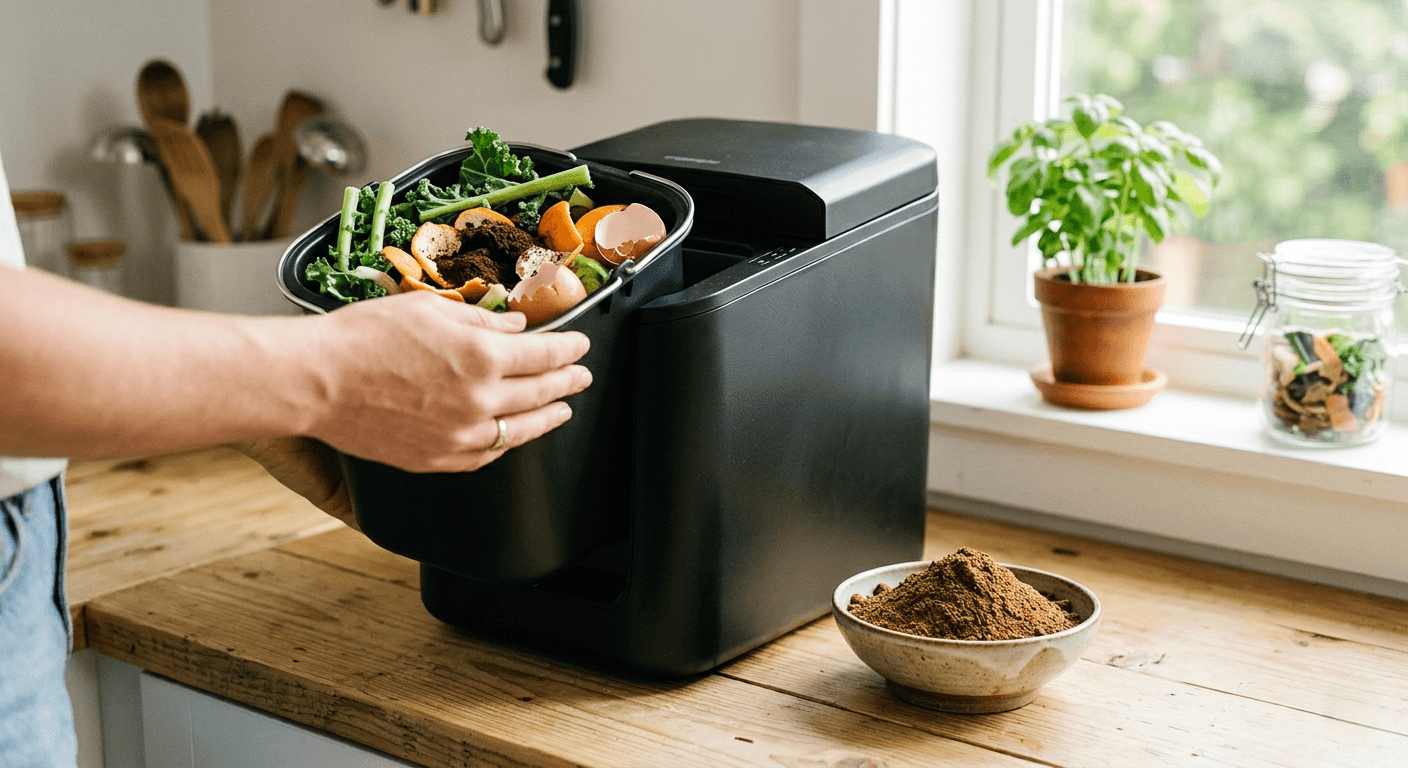

Most of us have felt that slight twinge of guilt while scraping dinner leftovers into a plastic bin bag. We know where it’s going: a landfill, where it will sit under layers of rubbish, producing methane and contributing to a cycle of waste that feels impossible to break. For the urban dweller or the busy homeowner, traditional composting often feels like a pipe dream—requiring space, patience, and a tolerance for the occasional garden pest.
Enter the MataRecycler, a piece of kitchen technology that promises to bridge the gap between high-tech convenience and old-school sustainability. It isn’t just another gadget for the countertop; it represents a shift in how we handle our personal environmental footprint. By turning organic scraps into something useful in a matter of hours, it’s making the “circular economy” a reality in the average household.
What is a matarecycler?
A matarecycler is an automated kitchen appliance designed to transform organic food waste into nutrient-rich soil amendment through a process of heat, agitation, and dehydration. It significantly reduces waste volume by up to 90%, providing an odourless, indoor-friendly alternative to traditional outdoor composting heaps.
This device effectively fast-tracks the natural decomposition process. Instead of waiting months for a compost pile to break down, the matarecycler uses specialised heating elements and grinding blades to process everything from vegetable peelings to coffee grounds into a dry, shelf-stable powder that can be used to fertilise houseplants or garden beds.
How Does This Technology Actually Work?
At its core, the matarecycler operates on three primary principles: heat, airflow, and mechanical breakdown. When you place your food scraps into the removable bucket and start the cycle, the machine begins a multi-stage process.
- The Drying Phase: High-temperature heating elements remove moisture from the organic matter. This is crucial because moisture is what typically leads to rot and the accompanying foul odours in a standard kitchen bin.
- The Grinding Phase: Once the scraps are dried and brittle, heavy-duty blades break them down into small, uniform granules. This increases the surface area, making the final product easier for soil microbes to process later.
- The Cooling Phase: The unit brings the temperature down to a safe level, leaving you with a dry, earthy-smelling material that is ready for use.
Unlike a traditional compost bin, which relies on a delicate balance of “greens” and “browns” and months of weather-dependent biological activity, the matarecycler provides a controlled environment that delivers consistent results regardless of the season.
Why People Are Switching to the Matarecycler
The sudden surge in interest around the matarecycler isn’t just about the “cool factor” of new tech. It addresses several practical pain points that have long made home composting a chore.
Total Odour Control
The most common complaint about food waste is the smell. Wet food scraps in a warm bin are a recipe for unpleasant scents. Most versions of the matarecycler utilise carbon filtration systems that trap smells during the processing cycle. This means you can keep it on your kitchen counter without turning your home into a temporary skip.
Space Efficiency
For those living in flats or houses with small yards, a large compost tumbler is out of the question. The compact footprint of this device makes it accessible to anyone with a spare plug socket. It’s “lifestyle-friendly” sustainability that doesn’t require an allotment or a garden shed.
Significant Volume Reduction
One of the most impressive feats of the matarecycler is how much it shrinks your waste. A full bucket of scraps—onions, pasta, fruit peels, and leftovers—can be reduced to a handful of dry “dirt.” This means fewer trips to the outside bin and a massive reduction in the number of bin bags your household uses.
Comparing Your Waste Management Options
| Feature | Matarecycler | Traditional Compost Heap | Worm Bin (Vermiculture) |
| Processing Time | 4–8 Hours | 3–12 Months | 2–4 Months |
| Indoor Friendly? | Yes, absolutely | No | Yes (if maintained well) |
| Odour Level | Minimal (Filtered) | High if unbalanced | Low to Medium |
| Ease of Use | One-button operation | Requires turning/aeration | Requires feeding live worms |
| Output Type | Dry soil amendment | Rich, dark compost | Worm castings/liquid tea |
| Winter Operation | Works year-round | Slows or stops | Requires temperature control |
The Environmental Logic: Why It Matters Now
We are currently witnessing a global shift in how we manage resources. Landfills are reaching capacity, and organic waste is a major culprit. When food rot in a landfill without oxygen, it creates methane—a greenhouse gas far more potent than carbon dioxide.
By using a matarecycler, you are effectively “pre-treating” your waste. You are removing the water (which makes up a huge portion of food weight) and stabilising the organic matter. Even if you don’t have a garden and choose to put the output in a green waste bin, you’ve reduced the transport weight and volume, significantly lowering the carbon footprint of your household waste.
What Can You Actually Put in a Matarecycler?
To get the most out of the machine, it helps to think of it as a specialised processor rather than a bottomless pit. While it is incredibly hardy, some items are better suited for the cycle than others.
The “Green Light” Items:
- Fruit and vegetable scraps (peels, cores, pits)
- Coffee grounds and paper filters
- Eggshells (excellent for adding calcium to the output)
- Cooked grains, pasta, and bread
- Soft bones (like small fish bones)
Items to Avoid:
- Large “marrow” bones or heavy beef bones
- Excessive amounts of cooking oil or liquid fat
- Hard fruit pits (like large peach or mango stones)
- Non-organic materials (plastic, metal, glass)
Following these guidelines ensures that the blades remain sharp and the motor continues to run efficiently for years.
Integrating the Matarecycler Into a Modern Lifestyle
Living with a matarecycler quickly becomes second nature. Most users find that they develop a rhythm: filling the bucket throughout the day and running the cycle at night when electricity rates might be lower. By the morning, the “waste” is gone, replaced by a dry material that smells vaguely like toasted crackers or earth.
For the keen gardener, this output is a goldmine. While it isn’t “finished” compost in the biological sense (it still needs to be mixed with soil to fully break down), it is a high-grade fertiliser. Mixing it into the top few inches of your garden soil or adding it to your potted plants provides a slow-release nutrient boost that revitalises the soil structure.
Maintenance and Longevity
One of the reasons the matarecycler stands out in the market is its durability. However, like any high-end appliance, it requires a small amount of care.
- Filter Changes: The carbon filters usually need replacing every 3 to 6 months, depending on how often you run the machine. This keeps the exhaust air smelling fresh.
- Cleaning the Bucket: Most buckets are dishwasher safe. A quick rinse or a cycle in the dishwasher once a week keeps the interior from developing any buildup.
- Blade Checks: Ensure no hard objects (like cutlery) accidentally fall into the unit, as this is the most common cause of mechanical issues.
Key Takeaways
- Efficiency: Reduces food waste volume by up to 90% in under 8 hours.
- Convenience: Compact, odourless, and designed for indoor kitchen use.
- Sustainability: Diverts organic matter from landfills, reducing methane emissions.
- Utility: Produces a shelf-stable soil amendment perfect for gardening.
- User-Friendly: Simple operation that fits into a busy daily routine.
The Final Verdict
Is the MataRecycler a necessity for every home? Perhaps not yet. But as we move toward 2026 and beyond, the pressure to manage our personal waste more responsibly is only going to grow. For anyone tired of the “ick” factor of wet bins, or for those who want to contribute to a greener planet without turning their backyard into a science experiment, it is an elegant, effective solution.
It turns a daily chore into a satisfying process of creation. Instead of throwing “away”—a place that doesn’t really exist—you are keeping those nutrients in your own ecosystem. It’s a small change in the kitchen that leads to a significant impact on the world outside your door.
FAQs
How much electricity does a matarecycler use?
On average, a single cycle uses about 0.5 to 1.5 kWh of electricity, which is roughly equivalent to running a modern dishwasher or a desktop computer for a few hours. Many users choose to run it during off-peak hours to further reduce costs.
Does the output smell like compost?
No, the output of a matarecycler typically has a very mild, earthy, or slightly toasted aroma. Because the moisture has been removed, it doesn’t have the “sour” smell often associated with traditional compost piles.
Is the output safe for all plants?
Yes, but it is potent. Because it is highly concentrated, it is best to mix the output with existing soil (a 1:10 ratio is often recommended) rather than planting directly into it.
Can a matarecycler process meat and dairy?
Yes, most models can handle cooked meat and dairy scraps much better than traditional compost heaps, which often attract pests when these items are added.
How loud is the machine during operation?
Most units operate at a noise level similar to a quiet dishwasher. You will hear a low hum and the occasional sound of the blades turning, but it is generally quiet enough to run in the background without being a distraction.