
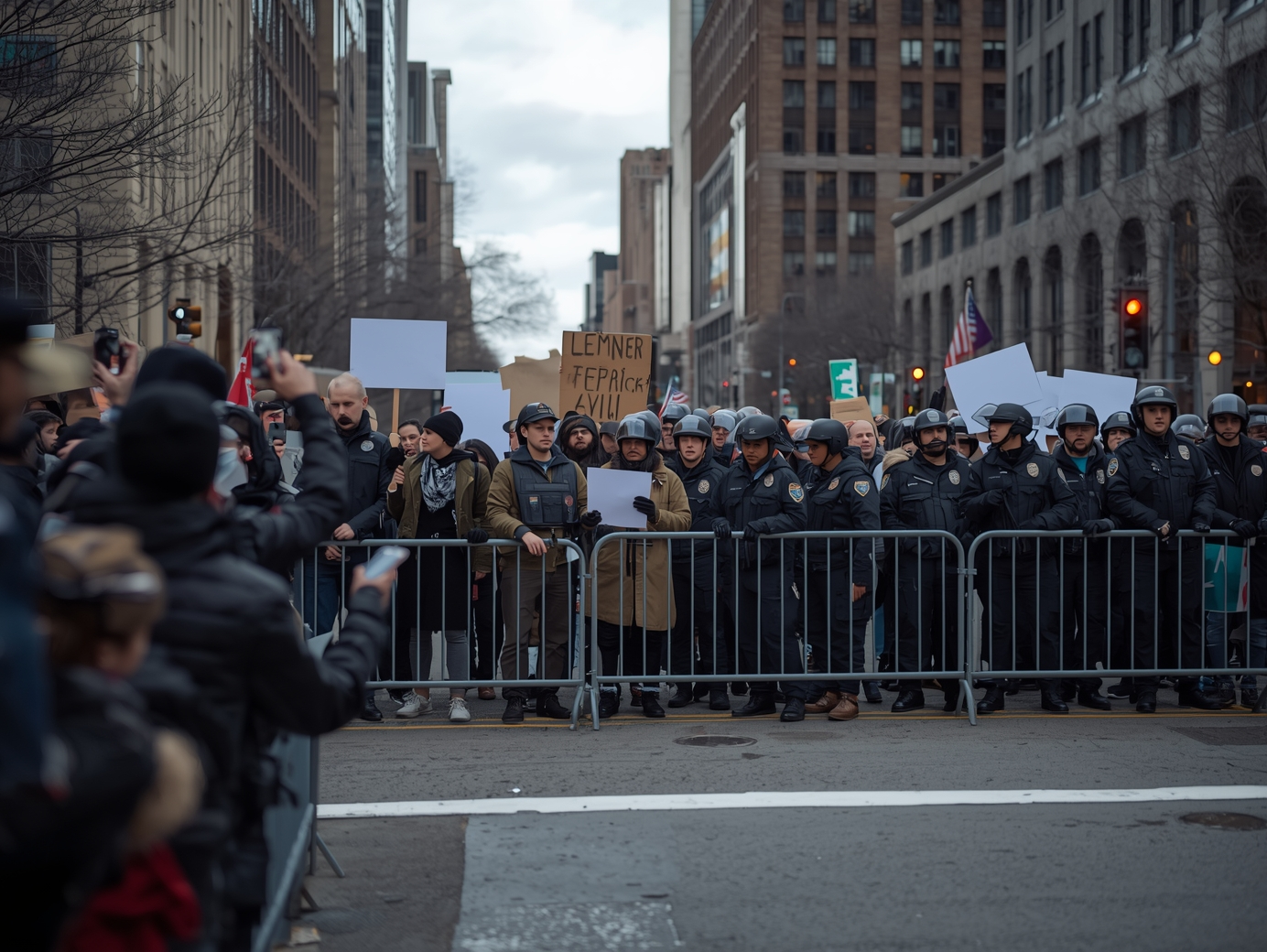

On January 7, 2026, Minneapolis changed overnight. By January 16, the city had moved from tense street demonstrations to a national headline with 2,000–3,000 federal agents reportedly in or headed to Minnesota and a presidential threat to invoke the insurrection act. In a single week, “Person A” (a small café owner near Lake Street) watched sales drop an estimated 40%, while “Person B” (a payroll supervisor for a delivery company) recalculated staffing costs after drivers refused routes near protest zones.
This story isn’t just politics. It’s operations, budgets, public safety, legal exposure—and how fast uncertainty can turn into a bill taxpayers must pay.
Quick Answer
The insurrection act is a federal law that can allow a president to deploy military forces domestically during extreme unrest. In Minnesota, it matters because protests tied to ICE activity have escalated after two shootings, raising risks of wider conflict, more arrests, and major public spending. What happens next depends on de-escalation, legal challenges, and public safety decisions.
What triggered the Minneapolis protests?
According to coverage, protests intensified after Renee Good, a U.S. citizen, was fatally shot by a federal/ICE agent during an enforcement-related confrontation. In the following days, tensions rose further after a separate incident where a Venezuelan man was shot in the leg during an attempted arrest.
Those two incidents became rallying points for demonstrators who argue federal tactics are excessive, and for officials and residents demanding accountability, transparency, and calm.
The key events, in plain terms
- A fatal shooting involving Renee Good sparked outrage and mass demonstrations.
- A second shooting involving a Venezuelan man widened fear around enforcement operations.
- The federal presence grew significantly, with 2,000–3,000 agents cited across reporting.
- Minnesota officials urged de-escalation as protests continued across Minneapolis.
Why the insurrection act is suddenly part of the conversation
The insurrection act sits in the background of U.S. history like a fire alarm: rarely used, but designed for moments of national breakdown. The president has threatened invoking the insurrection act as a response to persistent unrest, raising the possibility of military deployment in Minnesota if officials cannot restore order.
From a governance lens, that shifts the situation from “local disturbance management” to a high-stakes federal authority question—one involving civil liberties, chain-of-command decisions, and real fiscal consequences.
What counts as “escalation” in the real world?
Escalation isn’t only louder crowds. It can mean:
- Heavier tactical equipment in public spaces
- More arrests and larger court backlogs
- Curfews or restricted access zones
- Higher force posture and greater injury risk
- Significant spikes in overtime and emergency procurement
Minnesota leaders, the ACLU, and the legal risk pipeline
State and city leaders have publicly called for calm and warned against actions that inflame tensions. At the same time, legal groups—including the ACLU—have filed claims and lawsuits alleging aggressive tactics and civil-rights concerns tied to federal operations.
This matters for one reason many people overlook: lawsuits are long-tail liabilities. Even if a city isn’t the direct defendant, local agencies still incur costs for:
- records requests and compliance staff time
- coordination with state and federal partners
- policy reviews and training updates
- community mediation and oversight processes
Quote-style risk check:
- “From a compliance view, the fastest-growing cost isn’t the protest itself—it’s the liability trail that follows.”
- “Operationally, uncertainty is expensive. It forces agencies to spend first and justify later.”
- “When public trust drops, every response costs more—more staffing, more planning, more security.”
The money question: who pays when unrest continues?
In accounting terms, protests don’t hit only one ledger. They hit multiple.
1) City public safety budgets (short-term burn rate)
Even a few nights of heavy response can trigger significant cost pressure. Consider these scenario-based estimates for a city response posture:
- Police overtime: $150,000–$400,000 per day during major crowd control operations
- Emergency equipment and logistics (barricades, medical staging, transport): $50,000–$120,000 per day
- City cleanup and repairs (public property): $30,000–$200,000 depending on damage level
Those numbers vary, but the pattern is consistent: once multi-agency operations begin, the meter runs fast.
2) Local business losses (the silent tax)
If streets close or customers stay home, revenue collapses quickly. A realistic “week-of-disruption” snapshot in key corridors can look like:
- small restaurants/cafés: $5,000–$20,000 weekly revenue loss
- retail shops: $10,000–$50,000 weekly revenue loss
- event venues: cancellations that can reach six figures depending on scale
For many owners, that loss is unrecoverable because payroll, rent, and supplier contracts don’t pause.
3) Federal operations: big footprint, real logistics
When reports cite 2,000–3,000 federal agents, the logistics stack becomes massive. Even conservative operational estimates (travel, lodging, staging, vehicles, per diem, equipment) can move into millions of dollars per week—paid by federal budgets, meaning taxpayers either way.
Scenario Cost Snapshot (Estimated)
| Scenario | Who Pays | Short-term Cost | Long-term Risk | Notes |
| De-escalation + targeted enforcement | City + Federal | $300k–$900k/week | Lower | Reduced overtime, fewer injuries, fewer arrests |
| Prolonged protests + heavy crowd control | City + State | $1.5M–$4M/week | Medium-High | Overtime spikes, business disruption, more claims |
| insurrection act invoked + troop deployment | Federal + State | $5M–$20M/week | High | Civil liberties challenges, deeper polarization, sustained security footprint |
| Multi-lawsuit cycle + settlements | City/Federal insurers | $2M–$50M total | High | Legal fees + potential payouts + policy overhaul costs |
What this means in plain English
Minneapolis isn’t only dealing with protests—it’s dealing with compounding pressure:
- More enforcement activity increases public tension
- More tension increases response costs
- Higher response costs increase political conflict
- Political conflict raises the chance of bigger federal action
- Bigger action raises the legal and financial stakes for everyone
The insurrection act threat turns the situation into a national risk-management event: security decisions now affect not just safety, but budgets, civil liberties, and economic stability.
FAQ
1) What is the insurrection act?
The insurrection act is a federal law that can allow domestic deployment of military forces under specific conditions when unrest is considered severe.
2) Why is Minneapolis connected to the insurrection act right now?
Because protests linked to ICE activity escalated after two shootings, and the president has threatened using the insurrection act if unrest continues.
3) Who decides if the insurrection act is used?
The decision comes from the executive branch, but the legal, political, and operational consequences affect Minnesota officials, residents, and federal agencies.
4) What are the biggest risks for taxpayers?
The biggest taxpayer burdens are overtime, extended deployments, damaged infrastructure, business disruption, and long-tail litigation exposure.
5) What should readers watch next?
Watch for de-escalation steps, court filings, protest size changes, and whether enforcement tactics shift toward transparency and reduced confrontation.
For more clear, fact-first explainers that break down what headlines actually mean for people and budgets, ScopMagazine.com will keep tracking the numbers behind the news. Bookmark ScopMagazine.com so you don’t miss the next update.
Key Takeaways
- The insurrection act is being discussed because unrest and federal enforcement operations have intensified.
- Minneapolis protests expanded after the death of Renee Good and another shooting involving a Venezuelan man.
- A reported 2,000–3,000 federal agent presence changes the scale and cost structure of the response.
- Legal claims and lawsuits could create long-term expenses even after streets quiet down.
- The biggest financial risk is prolonged instability: overtime, closures, damage, and litigation all compound.