
You know that moment when you “clean up” by stuffing everything into one random drawer… and the drawer won’t close?
Yeah. This is for that moment—and the ten other clutter hotspots you’ve learned to ignore.
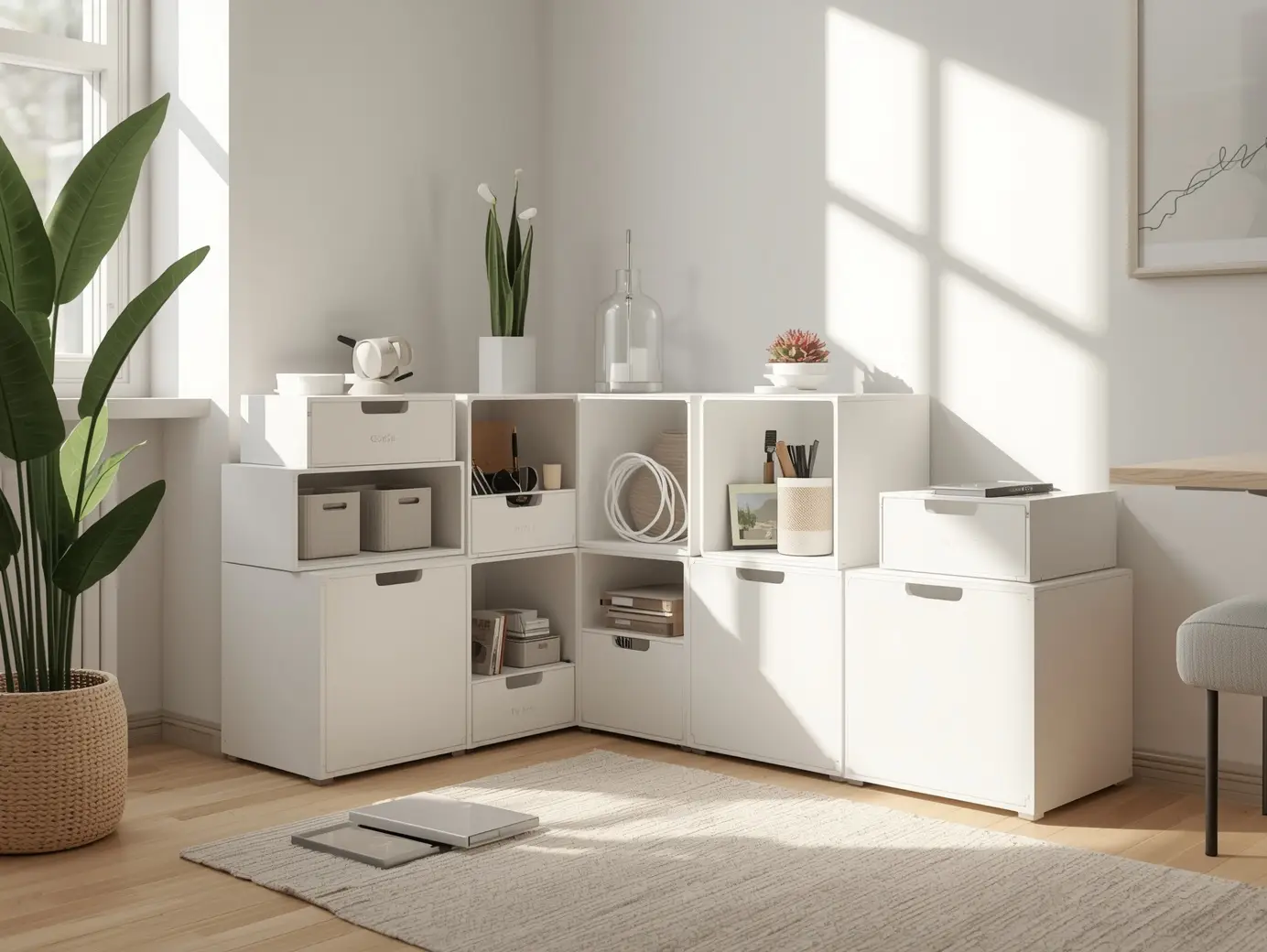
Slylar Box is a modular storage system made of reconfigurable boxes/compartments you can mix, match, stack, and adjust as your needs change. If you want a cleaner space without committing to bulky cabinets, start small (a few modules), then expand only where clutter keeps returning.
What is the Slylar Box?
Slylar Box is a modular storage solution designed to adapt to your space and your stuff. Think of it like building blocks for organization: you can create a setup that fits your closet today, then rearrange it for your office next month, and still tweak it again when your hobbies (inevitably) change.
Instead of buying a single rigid cabinet and trying to make your life fit it, the idea here is the opposite: your storage should fit your life. That’s the whole appeal of modular storage systems—flexible layouts, adjustable compartments, and setups that can grow over time.
Why modular storage is trending
Let’s be honest: a lot of organizing trends come and go. But modular storage keeps sticking around because it solves real, everyday problems—especially in modern homes.
People keep searching stuff like “how do I organize a small room” and “best modular storage for apartment” because:
- Homes (and rents) aren’t getting bigger.
- We have more “mini categories” of stuff (chargers, cables, skincare, hobby supplies, kids’ projects).
- Our spaces pull double duty (work-from-home setups, multipurpose rooms, shared living).
Modular systems are popular because they let you:
- Scale up when you need more storage.
- Scale down when you move, declutter, or change rooms.
- Avoid wasted space that happens with one-size-fits-all cabinets.
And yes—there’s also the aesthetic factor. Modern modular boxes often look cleaner than mismatched bins, which matters if your storage is visible in a living room or workspace.
The real benefits of Slylar Box
Here’s what people typically love about modular storage (and what the Slylar Box concept leans into):
1) Flexibility that actually feels useful
You can reconfigure the layout instead of being stuck with one setup forever.
If you want storage that adapts to new stuff, choose modular. If you constantly buy new bins because your needs changed, modular will feel like a relief.
2) Easy scaling
A common organizing failure is going all-in with a massive system… then realizing it doesn’t match your habits.
Modular helps because you can:
- Start with a small “problem area” (like the entryway drop zone)
- Add more modules only where clutter keeps coming back
3) Space-saving without the “storage room” look
Traditional storage can be bulky. Modular setups can be shaped around corners, under desks, inside closets, or along narrow walls—great for small apartment storage.
4) Looks cleaner than a pile of random bins
Slylar Box is described as sleek and decor-friendly, with customization options (like different finishes/colors) so it doesn’t scream “garage storage” in a bedroom or office.
5) Better “findability” (the underrated superpower)
The biggest win in home organization isn’t owning fewer things—it’s finding what you own quickly.
If you want to reduce clutter fast, make items easy to put away. Modular compartments help because they create natural “homes” for categories.
Where Slylar Box fits best: customization ideas by space
Below are practical setups you can copy. The goal isn’t perfection—it’s making your daily life smoother.
Home setups: closet, kitchen, kids’ toys
Closet:
- Use compartments for: socks/underwear, belts, scarves, gym gear, seasonal items
- Keep one “overflow” box so you don’t create floor piles
Kitchen:
- Snacks + lunch supplies (especially if you’ve ever searched “how to organize kitchen cabinets without remodeling”)
- Baking tools: measuring cups, piping tips, sprinkles (aka the tiny chaos-makers)
- Wraps + bags + foil in their own dedicated compartment
Kids’ toys:
- “Type” organization beats “perfect” organization:
- Building toys
- Dolls/figures
- Art supplies
- Small vehicles
- Add a simple rule: one box = one category
- Label with words and icons for pre-readers
Office setups: paperwork, gadgets, and the cable jungle
If you’ve asked “how do I organize my home office” or “best way to store cables and chargers”, try this:
- One module for daily-use tech (mouse, chargers, USB hubs)
- One module for documents (sorted by “Now / Soon / Later”)
- One module for stationery (pens, staples, sticky notes)
If you want less desk clutter, store by frequency. Daily items should be within arm’s reach; monthly items should be one step away.
Workshop/garage: tools that always vanish
Workshops thrive on visibility and quick access.
Try modules for:
- Screws, nails, anchors (separate by type)
- Tape, glue, adhesives
- Small hand tools (multi-bit drivers, hex keys)
Fix for the classic problem:
If you keep thinking, “Why is my garage always messy?”, it’s usually because small items don’t have small homes. Modular compartments are basically made for that.
School/classroom: supplies that multiply overnight
Teachers (and parents) can use modular boxes for:
- Markers, glue sticks, scissors
- Student project bins (one per group)
- “Turn-in” and “Return” compartments
If you want smoother mornings, create a “launch pad” box near the door: pencils, permission slips, lunch cards, spare hair ties, whatever always causes last-minute panic.
Outdoor/camping: gear that should be ready to grab
Camping is where organization pays you back immediately—nobody wants to dig for a headlamp in the dark.
Set up modules for:
- Lights: headlamps, lanterns, batteries
- Cooking: lighter, spice kit, utensils
- First aid + hygiene
- Small repair items: cord, tape, patches
The modular idea is especially handy here because you can keep a “ready kit” year-round and just add seasonal items when needed.
Slylar Box vs traditional storage: what’s actually different?
Traditional storage works—until it doesn’t. Here’s a quick comparison.
| Feature | Slylar Box (Modular System) | Plastic Bins | Cabinets/Drawers | Open Shelves |
| Flexibility | High: reconfigure anytime | Low: fixed size | Low: fixed layout | Medium |
| Scalability | Easy: add modules as needed | Medium: buy more bins | Hard: expensive/space-heavy | Medium |
| Space efficiency | High: tailor to corners & gaps | Medium: often wasted space | Medium: bulky footprint | Low–Medium |
| Visual tidiness | High: cohesive look | Medium: mismatched bin stack | High: hidden storage | Low: visible clutter |
| Best for | Changing needs, multi-use rooms | Bulk storage | Long-term furniture storage | Display + minimal items |
If you’ve ever googled “shelves vs cabinets for storage”, the answer is usually: shelves look nice but show everything; cabinets hide mess but are rigid. Modular systems try to land in the sweet spot—organized and adaptable.
How to choose the right setup
This is the part people skip… and then wonder why their new storage “didn’t work.”
Step 1: Measure the real problem zone
Not your whole home. Not your dreams. The real hotspot:
- the entryway pile
- the closet floor
- the office corner
- the “junk drawer” that ate your scissors
Step 2: Sort by behavior, not by fantasy
Ask: Where do you naturally drop things?
If you keep searching “how to keep my room organized daily”, the secret is to store items where your habits already place them.
Step 3: Choose categories that feel obvious
Good categories:
- “Keys + wallet”
- “Mail + papers”
- “Chargers”
- “Kids’ art”
- “Tools”
Bad categories:
- “Miscellaneous” (aka future chaos)
- “Important Stuff” (aka you’ll never find it)
Step 4: Build for access, not just storage
Use this simple rule:
- Daily items: easiest-to-reach compartments
- Weekly items: reachable but not prime real estate
- Occasional items: higher, lower, or farther back
Step 5: Leave 10–15% empty space
This is not wasted space—it’s breathing room for reality.
If you want a decluttering system that lasts, plan for overflow. Otherwise, overflow becomes the floor.
Step 6: Label lightly (but clearly)
A small label beats a perfect aesthetic that confuses everyone.
Common storage mistakes
Even great systems fail if you fall into these traps.
Mistake 1: Buying storage before sorting
Fix: Do a rough sort first: keep/donate/relocate. Then buy what fits the kept items.
Mistake 2: Making categories too specific
Fix: Start broad, then refine later. “Craft supplies” is fine at first. You can split it later into “paint” and “paper” if it grows.
Mistake 3: Hiding daily items behind effort
Fix: If you have to open three lids to put something away, you won’t.
Mistake 4: Using “junk” as a category
Fix: Create a temporary “decide later” box with a deadline. If you didn’t need it in 30 days, you probably don’t need it.
Mistake 5: Treating storage as a one-time project
Fix: Do a 5-minute “reset” once a week. Put on a song. You’re done before the chorus gets old.
Who is Slylar Box best for
Best for:
- People who reorganize often (new hobbies, new gear, new routines)
- Small-space living: studios, shared apartments, multipurpose rooms
- Families who need an “easy-to-maintain” organization
- Anyone who wants modular storage that looks clean in living areas
You might skip it if:
- You only store a few bulky items (like seasonal decor) and never move them
- You want fully built-in cabinetry and don’t need flexibility
- You prefer open shelves for display more than closed compartment storage
A modular storage system shines when your categories change, not when everything stays the same for years.
Real-life scenarios
Scenario 1: The entryway that became a “stuff museum.”
Aamir comes home, drops keys on the counter, tosses mail on the dining table, kicks shoes near the door. By Friday, it looks like the house is holding a yard sale.
He sets up a few compartments near the entrance:
- one for keys + wallet
- one for mail
- one for “returns/needs to leave the house.”
- one for shoes
Now the entryway doesn’t become a guilt zone. It becomes a reset point.
If you want less mess by the front door, create a “drop zone” with clear categories.
Scenario 2: The home office that slowly ate the living room
Sara starts remote work with a laptop. Two months later, she’s got notebooks, chargers, camera gear, paper stacks, and three “temporary” piles.
She builds a modular setup:
- “Today” compartment: current tasks + one notebook
- “Gear” compartment: chargers, adapters, headphones
- “Archive” compartment: documents she must keep
Her desk looks calmer, and she stops asking “how to reduce clutter fast” every Sunday night.
Scenario 3: The camping gear scavenger hunt
Bilal plans a quick weekend trip. The tent is somewhere. The headlamp is missing. The stove is in a bag that might also contain… socks?
He groups modules by function:
- sleep (headlamps, batteries, lantern)
- cook (stove, fuel, lighter, utensils)
- safety (first aid, whistle, tape)
Next trip? He grabs the boxes and goes. No pre-trip panic spiral.
A few smart ways to make modular storage look “intentional.”
A lot of people want organization and vibes. You can have both.
- Match finishes/colors to the room so storage blends in rather than shouting “utility.”
- Keep visible modules for visually pleasing categories (books, textiles, labeled boxes)
- Hide chaotic categories (random cables, spare parts) in less prominent spots
- Use consistent labels (same style, same placement)
And if you’re comparing options because you keep searching “best storage solution for small apartment”, remember: the best one is the one you’ll actually maintain.
Frequently Asked Questions about Slylar Box
1) What is Slylar Box used for?
It’s used for organizing items in a flexible, modular way—home, office, classroom, workshop, or even camping gear.
2) Is Slylar Box better than plastic bins?
If you need adaptable, reconfigurable storage, yes. Plastic bins are better for simple bulk storage that rarely changes.
3) Can I customize the compartments?
The Slylar Box concept highlights customization—adjusting compartments and building different configurations based on your needs.
4) Does modular storage work for small rooms?
Yes. Modular setups are popular for small-space organization because you can shape them around tight areas and avoid wasted space.
5) What’s the easiest way to start?
Start with one problem zone (entryway, closet, desk). Create 3–5 categories, then expand only if that zone stays tidy for two weeks.
6) How do I keep it from getting messy again?
Use labels, keep categories broad, and do a weekly 5-minute reset. Also leave a little empty space so overflow doesn’t become a pile.
7) Is it only for homes?
No. Modular storage works well for office organization, classrooms, garages, and travel/camping setups.
8) Who benefits most from a modular storage system?
People with changing storage needs—families, renters, remote workers, hobbyists, and anyone trying to declutter without buying bulky furniture.
Key Takeaways
- Slylar Box is a modular storage system designed to adapt as your needs change.
- Modular storage is trending because it’s flexible, scalable, and great for space-saving organization.
- The best setups are built around habits (where you naturally drop things), not wishful thinking.
- Start with one clutter hotspot, create simple categories, and leave a bit of empty space.
- Modular storage is especially useful for small apartment storage, office organization, workshops, classrooms, and camping gear.
If you want another look at the original concept and examples, here it is again:
A friendly final word
Clutter isn’t a character flaw—it’s usually just a storage system that doesn’t match real life. The win isn’t having a perfect home; it’s having a home that’s easier to live in on a random Tuesday.
If you like practical, no-shame organization ideas like this, Scop Magazine is where we keep the good stuff—simple guides, real-world setups, and fewer “Pinterest-perfect” expectations.